Apni Zameen Apna Ghar: Punjab Free Plot Scheme, Official Details
By PakKhabar Editorial Team · Published 21 October 2026 · Updated 22 October 2026 · Last verified 22 October 2026

Key Facts
| Program | Apni Zameen Apna Ghar Programme |
|---|---|
| Jurisdiction | Punjab |
| Update type | OFFICIAL LAUNCH |
| What changed | Official portal details confirmed: phase one covers 2,000 free residential plots in 19 districts for homeless, deserving Punjab residents, allotted after scrutiny through transparent balloting. |
What is new
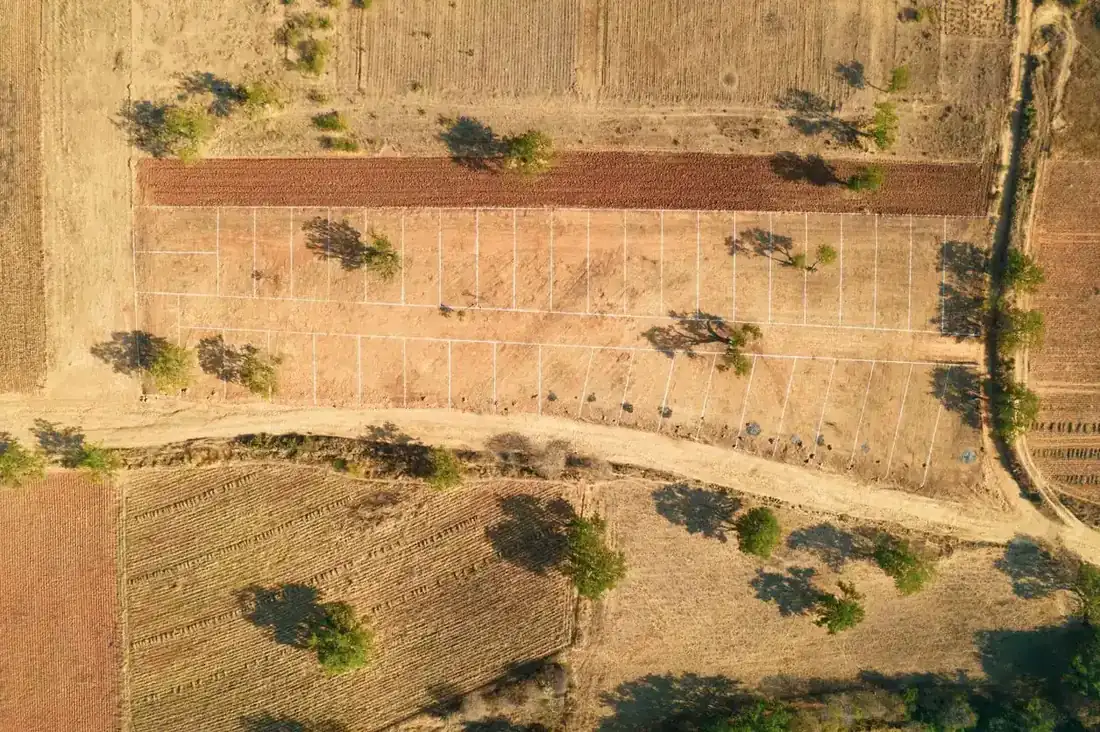
The Government of Punjab’s Apni Zameen Apna Ghar program gives free 3-marla residential plots to families in Punjab who own no home or land of their own. It is aimed at families who are homeless in the plain sense of the word: living in rented rooms, in a relative’s house, or in informal housing, with nothing of their own to build on. According to the official AZAG portal, the first phase covers about 2,000 plots in 19 districts. Plots are not handed out on a first-come basis: applications are scrutinized by PHATA, and allotment among eligible applicants is made through balloting. Applications are accepted only on the official portal, azag.punjab.gov.pk. The rest of this article is the practical guide: who can apply, what to prepare, how the ballot works, and which widely shared claims about this scheme the official rules do not support.
Before anything else, you can test yourself against the official criteria in our Apni Zameen Apna Ghar eligibility checker. It takes a minute and saves you from preparing an application that was never going to qualify.
Who can apply
The official criteria are short, and every one of them has to hold at the same time:
- You are a permanent resident of Punjab, as shown on your CNIC, and you apply for a scheme in your own district.
- You, your spouse and your dependent children own no plot or house anywhere in Pakistan.
- You have a clean criminal record.
- You are not a bank defaulter.
Two of these conditions are misunderstood often enough to be worth spelling out. The no-ownership rule covers the whole family unit named above, not just the person filling the form. A small plot in your wife’s name, or a house your dependent son owns in another city, disqualifies the application. And the district rule follows your CNIC: you apply where you belong, not in whichever district you think has better plots or better chances.
Two claims blogs make that the official rules do not
Because this scheme is heavily covered by blogs and social media pages, two invented conditions now circulate as if they were official. The first is an income limit. You will read confident statements that families earning above a certain monthly income cannot apply. The official criteria set no income limit. You are asked for proof of income as a document, which is a different thing from an eligibility ceiling.
The second is an NSER requirement. Some sites tell readers to complete a BISP or NSER survey before applying. AZAG asks for no such survey; NSER belongs to the BISP system, which is a separate program with separate rules. If a website lists either of these as an official condition for Apni Zameen Apna Ghar, it has mixed up two programs, and anything else it tells you about this one should be treated with the same suspicion. Our scheme page for Apni Zameen Apna Ghar keeps the official criteria in one place, and the schemes index covers the other programs readers confuse it with.
Documents you need
The official FAQ names three things: your CNIC, proof of income, and an affidavit stating that you own no property. Prepare all three before you start the form.
Treat the affidavit seriously. It is a sworn statement, and a false one is a legal problem, not a formality that everyone signs and forgets. If anyone in the family unit owns property, the honest position is that you are not eligible this phase, whatever a local agent tells you. Also make sure your CNIC is valid and carries your current district, because the district on the card decides where you may apply.
How to apply, step by step
- Open the official portal, azag.punjab.gov.pk. It is the only place applications are taken.
- Register an account with your own mobile number, and keep the login details yourself.
- Fill the application for your own district’s scheme, entering family and income details exactly as your documents show.
- Upload the required documents: CNIC, proof of income and the no-property affidavit.
- Submit, and save the application ID or acknowledgement the portal gives you. You will need it to follow your case.
After submission, PHATA scrutinizes applications to verify eligibility. Applications that pass scrutiny go into the ballot for their district, and successful applicants receive allotment. There is no agent route into this process and no fee that speeds it up. Anyone offering to arrange a plot for money is offering something the system does not contain.
How the ballot and allotment work
Selection follows the sequence the official portal describes: application submission, scrutiny by PHATA, balloting among eligible applicants, then allotment. The ballot is a draw among people who have already been verified as eligible, which is why scrutiny comes first. Being eligible does not guarantee a plot in phase 1, because the phase has about 2,000 plots across 19 districts and eligible applications are expected to be far more numerous. It does mean your name is in the draw with everyone else’s, on equal terms.
Keep your application ID safe after submitting. Ballot results and status questions are handled through the portal, and the ID is how your application is found.

After allotment: the construction deadlines
Winning a plot starts a clock. Under the official FAQ, a successful applicant must start construction within six months of taking possession and complete it within two years. These are conditions of the allotment, so read the allotment letter carefully when it arrives, because its terms are the binding ones.
Plan for this before you apply, not after you win. A free plot is not a free house, and a family that cannot begin building within six months should think hard about timing. Budget honestly as well: even a small house needs foundations, walls and a roof before it is livable, and the cost of materials will decide how comfortably the two-year deadline can be met. The plot is meant to become a home, and the deadlines exist to keep it that way rather than leaving allotted land empty.
Mistakes to avoid
- Applying in a district that is not your own. The application will not survive scrutiny, however complete the rest of it is.
- Applying when your spouse or a dependent child owns property somewhere. The rule covers them, and the affidavit you sign says so.
- Paying anyone who promises to confirm a plot. Allotment is by ballot after scrutiny; there is nothing to buy.
- Trusting a closing date or a fee announced on social media when the official portal announces neither. Check the portal itself.
- Filling the form on a shared computer at a photostat shop and leaving your account logged in, or sharing the one-time code sent to your phone. Your application and CNIC details sit behind that login.
If the portal throws an error while you apply, our guide to fixing online application errors covers the usual causes and fixes. And if you are comparing Punjab’s plot scheme with housing finance options, the tools page and the scheme pages linked above lay them side by side.
What remains unconfirmed
The official portal does not publish a closing deadline on its main page, so this article does not state one. If a deadline is officially notified, this page will be updated and the change recorded in its update history.
Eligibility
- Permanent resident of Punjab as per valid CNIC, applying for a scheme in their own district (official portal).
- Applicant, spouse and dependent children must own no plot or house anywhere in Pakistan (official portal).
- Clean criminal record and not a bank defaulter (official portal).
Required Documents
- CNIC, proof of income, and affidavit of no property ownership (official portal FAQ).
Popular Questions
Is Apni Zameen Apna Ghar the same as Apni Chhat Apna Ghar?
No. Apni Zameen Apna Ghar allots free plots through the AZAG portal. Housing finance is a separate program, see the federal Apna Ghar scheme page on this portal.
Is there an income limit for Apni Zameen Apna Ghar?
The official criteria do not set an income limit. You will still be asked for proof of income as a document, which is a different thing. Income ceilings quoted on blogs are not part of the official rules.
Do I need an NSER or BISP survey to apply?
No. AZAG does not require an NSER survey. That survey belongs to the BISP system, which is a separate program.
Can I apply for a plot in a district other than my own?
No. Applications are accepted only for schemes within your own district, as per your CNIC.
My wife owns a small house. Am I still eligible?
No. The no-ownership rule covers the applicant, the spouse and dependent children. If any of you owns a plot or house anywhere in Pakistan, the application does not qualify.
Official Sources
- AZAG official portal, Apni Zameen Apna Ghar (Government of Punjab (PHATA)) (2 May 2025)
Source evidence is checked again before every update. If any detail here differs from the official portal, the official portal is correct, please tell us so we can issue a correction under our Corrections Policy.
Update History
- 21 October 2026: Article created from the official AZAG portal with full source evidence; eligibility, documents and process verified line-by-line. Application status is shown as 'check official portal' because the portal does not state a closing deadline.
- 22 October 2026: Expanded with verified criteria and fuller practical guidance.